
Empowering Individuals, Transforming our Community
Need Shelter or know someone who does?
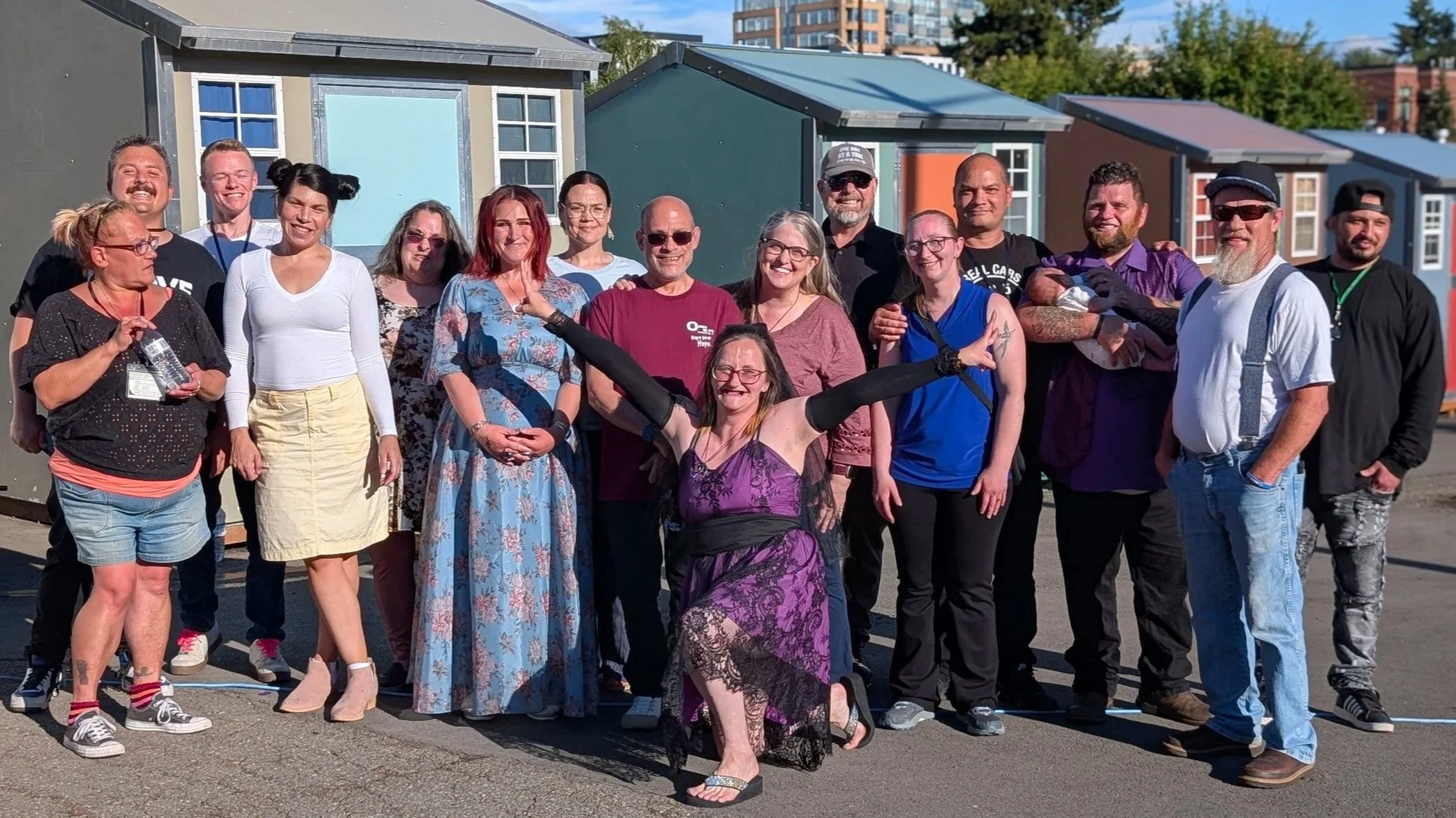
OUR MISSION
To lift people out of homelessness through advocacy, support and resources, while serving the community with integrity, transparency and respect.
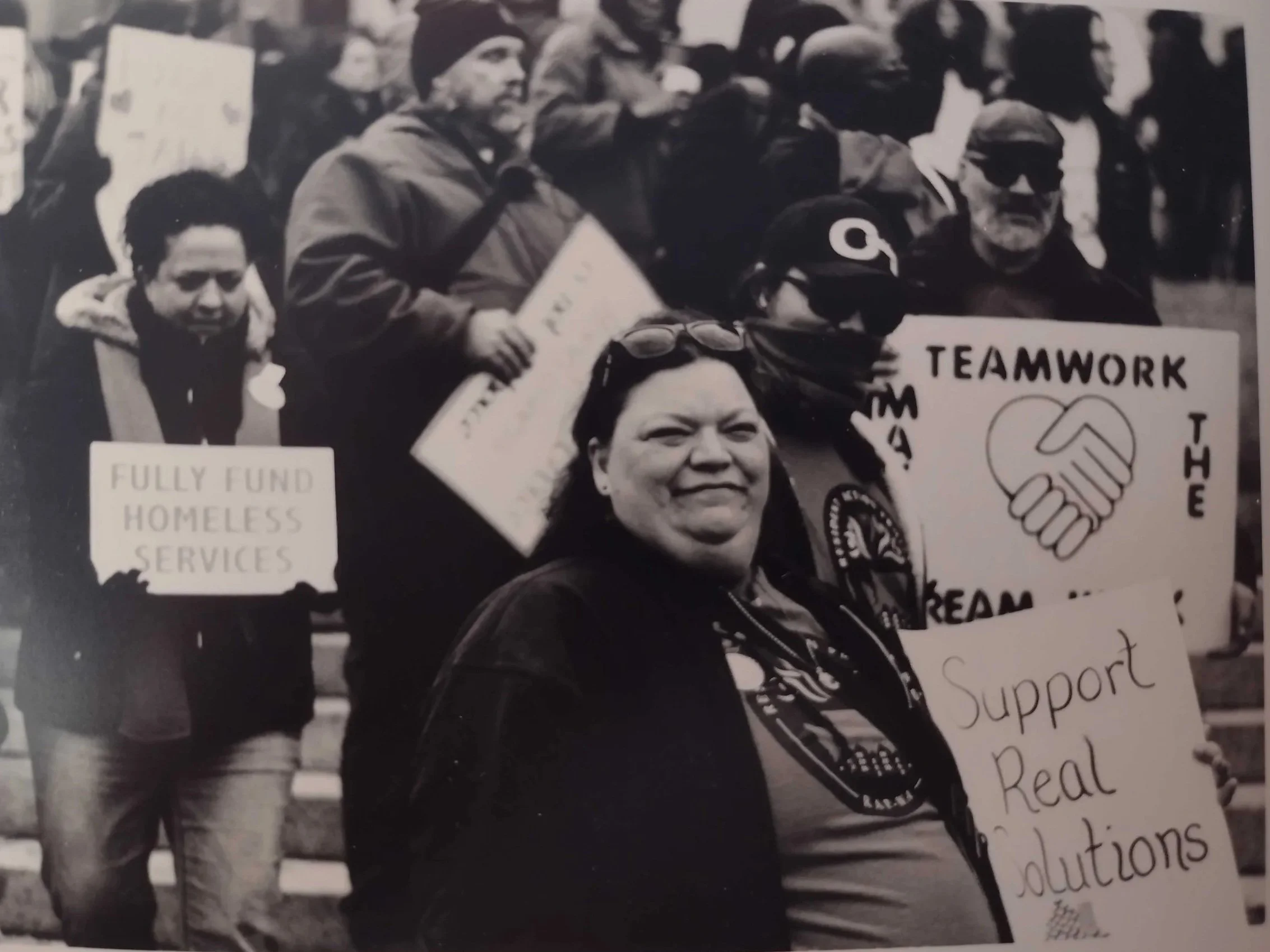
Help Build a Stronger Community
At Outsiders Inn, we believe everyone deserves a safe place to call home. We can't do it alone. Your support is crucial in helping us provide life-changing services to our neighbors experiencing homelessness.
Here are three ways you can join our mission:
Volunteer Your Time

Donate Essential Items

Give a Financial Gift

MORE ON OUR YOUTUBE
Interviews from People in our Programs

Open this video’s page to find their extended interview.
Extended Interview:
Transcript Includes Mature Material, Audience Discretion is Advised
I'm actually pretty excited that we got asked to do this, cause some feel like I'm worthy enough to be going through this and being able to accept all of this stuff, because I was a turd, to be nicely put. Changed everything around and in a short amount of time. It still feels surreal, but it also feels like too good to be true.
There we go. I don't deserve this, even though I do deserve this because we worked our butt off of it. But it's still hard to fathom that this is actually happening. We're graduating from outsiders, and we're we've graduated a community core. We've it's just one more stepping stone in the long journey of life. But it's still surreal sitting in the leasing office, filling out the tax paperwork and then signing our lives away as he likes to put on our lease.
That's when it became real. Then he's moving in yesterday for kung fu and everything in LA, just waiting to get furniture and everything. We got our we got a brand new bed for get out and take a hot bath, soak my back, the first bath. And how long since our last apartment back in 2024. For me, I was born for an organ.
Four days after I was born. I was raised here and washed in the, from Vancouver to within Cougar area. And I kind of reached the smart, graduated high school when I was 14. I graduated with a diploma. I went to Job Corps. I went to culinary school. I really ain't got nothing to show for all the conversations that I have had in life, but I don't know, I'm told I'm a double.
I'm a double edged sword because I'm both smart and street smart, because I've been out on the streets many times. It was all due to the choices that I made in my life, and, I didn't make some very good choices. So I raised my daughter the first six and a half years of her life by myself as a single father in recovery, and when I lost custody of her and called the state of Washington on myself, had agreed to open adoption in 2014, I lost all three things.
I lost my daughter to the state of Washington. I lost my grandfather, he who's my hero in life, and she gave birth to stillborn twins. So I really haven't been the same since then. And then I relapsing and kind of it screwed me up mentally. So I'd go I'd go through that throughout life, have visitations with my daughter, all this stuff.
But when they told me I wasn't getting my daughter back, I kind of I kind of really lost it. I kicked the doors out of the children's services up in White Salmon or whatever. Washington, stuff like that. Never saw my daughter again. And after 11.5 years and not seen her, I got to reunite with her in 2024. And, her parents brought her down from South Carolina.
They were even faster than she wanted to find me after she turned 18. Once the state was a state of Washington was out of the picture. They helped her find me over Facebook, and I don't know how to carry on a conversation with her. I do the best I can because I don't want to offend her. I don't know what to say to her, but I just I reassure her that I want a relationship with her and I.
I just don't know what to say to her. So I at least try every morning and texture and tell her, ask her how she's doing. Our family up there in South Carolina, it's done through all this. I've been with this one right here for almost 14 years. We've been friends for over 31 years, and we're finally getting married on 26th of this month.
So right here at the Tiny Home community at 415 West. Okay. So when we very first met, it was in, oh boy, a recovery meeting, and I was with somebody else, and the somebody else wasn't really treating me like any relationship should be treated. And ignoring me and just no girl wants that. So he proceeded to tell my significant other at the time, if you don't start treating her better, some guy like me is going to come and take her away and treated the way she should be treated.
Well, a week goes by and I go up to here, up in LA center to meet his family, which, it was just at that point, casual ish. I met his family. I met now deceased older brother. But the very first place we met was in a AA meeting at the ERS Club in Portland. I'll feel that one.
Hell, not knowing where your next meal is, I know you have food stamps. Not knowing where your next meal is going to come from. And on top of that, having friends who you think are friends, but they're only really out to get what you have or what you, you know, don't have. But you you have, trust is very few and far between those really people that if you start out giving them trust and then something, someway, somehow it always gets broken.
You're amazing. Not wondering where I'm going to get close, not wondering, oh, am I going to be able to take a shower today? Clean up myself being a female after that crappy time of the month? I don't have to worry about that. No, I mean, since December 13th when we moved in here, God bless the heart team and outsiders in for allowing us to even be here.
Pretty much the whole heart team bent over backwards to get us in here because they knew of our suicide attempt. They knew of our entrances into Rainier Springs for mental health, and they knew of his mental health and physical health conditions as well as mine. They were flat out. They do not have any reason to be outdoors, but it took a lot.
I mean, being homeless took a major toll, but being here when we were here at 415 and now in our own apartment, we get to make the rules and our old and our new apartment, and I feel that 415 West was an integral part of creating stability and our lives when we had none. I'm very grateful and appreciative to outsiders in and every organization that we've worked with today that we the day we decided we would both get clean and we were with our recovery navigator on the 16th to November, and we want to inject ourselves into Rainier Springs over on Thanksgiving week.
And we both went in for I went in for six days. She was in for seven days, and we ended up staying on the street two more nights after we both got out of Rainier Springs. And then we got in a shelter, three outsiders in for two and two days later. We were here seven months ago today, and we've been clean and sober ever since.
I got a sponsor that I respect out here in the community. I want to do what he's doing. And if it wasn't for the hard team, outsiders in, just, people like community court and and, Seymour, I wouldn't be where I am today. And when I decided I was going to get clean and everything, the hard team told me that she could give me an interview for a job.
And if I was to get my head right and get clean, she kept her word. Because now I work for talking trash. I'm getting ready to become a driver, and I go around, clean the city parks and make it safe for the children to play in the parks again. And this all came from this all came back from back on the 16th.
I'll try it. I hung myself off the overpass on, fourth. And in 205 I literally hung myself. Tried to kill myself that day. November November 15th, two. It was the second time I tried and we went into the Rangers range. Honestly, I have these all my pockets before I went and did it. When I went to hang myself, for some reason, I was hanging there and I just heard a big old voice telling me that there was a friggin pocket knife in my back pocket.
And somehow there was. And I, right as I cut myself down, my buddy come underneath the bridge and drove me up this hill and friggin went, got her and everything. And then, within that same week, within a couple days, I tried to do it again. Somehow, mysteriously, my rope had a slits in it. So I film busted my tailbone.
Oh damn thing. Oh, hell, you who did that? But somebody put slices in my rope so I didn't even get to. But the first time I covered the circulation up to my brain for like, two minutes in the summer months. Clean. I'm learn how to, I just brought the men's, step nine of the 12 step program to my grandfather and my brother.
Learn how to deal with those emotions and mourn over them. Yeah. I just miss my grandpa. My brother, and I know, I know, I know, they're smiling down on the crowd right now, so I'm doing what I'm doing, and I'm helping others. And I got a good friend of mine here at 415. Come to find out, he's my little cousin.
And, he's now ten and silver just right behind me with the five months other people that come in and Court of Inspired leave that inspired to go to treatment. And they went, I just tell everybody nowadays that I pray for them and there's a better way of life. There's a solution to a different way. Oh, and they all says, don't ever, don't ever, don't ever bottle stuff.
Learn how to express your emotions. Because a real man can show emotions and feelings. You don't believe that. Just don't believe that old saying that man doesn't show. Emotions are filling through the sign of weakness. It's actually it's actually a sign of, of needing help in romance. Ask for help anywhere. Who are you? And what did you do with my husband?
No. I'm kidding. When I was in that dark place. Don't be scared to open up, because you never know when somebody. You, look up to might have gone through the exact same thing. I can say that for all certainty that that's why I chose the sponsor that I have is because a she's loud and obnoxious. She's also got a heart of gold, and she's been through a lot of the same exact trauma that I have.
And and they were always telling me, you got this. You're stronger than your problems. And a lot of their positive affirmations is what got me through as well as him. But we were both in the same situation. So it's kind of the blind leading the blind when you're in that situation. But when you have an outside source to help you, it doesn't make it so bleak.
But all it takes is you to want it. And not everyone out here wants to get the help. But what I can say from own personal experience, don't knock it till you tried it. Because look where we are right now. We're not homeless anymore. We have a car. We have a dog, which is mine that I absolutely adore.
Even though she's a bed hog. Being in those dark places, I always had an animal to like during my tears and listen because they don't talk back. And so it makes it kind of easier to open up, even if it is an animal, a hamster, guinea pig, frog, you name it. Something that you can open up to. Even a stuffed animal I am in had that those times where I didn't have an animal and I had stuffed toys and opening up just made it easier.
Like just don't bottle it up, don't do it because it takes a toll on your not only your mental health, but your physical health. And I seriously doubt my physical health would. It would be as bad as it is if I hadn't bottled up those emotions from the time I was four and a half till now, I don't think I'd be sick physically and mentally as I am, because stress takes a toll on the body, so does anxiety.
And when you've been diagnosed with those for as long as you can remember, proof's in the pudding. It takes a toll, I say. I have to say my work is very is was my mental health. I always kept a lot of secrets buried from my passion until I got those secrets out. Talking to somebody at least once every two weeks.
It was it just kept me alive. And so that was all helped in my drug addiction to methamphetamines and a whole lot of pride and ego and ego. I didn't like to ask for help, but today it's, I like the old saying that my grandfather, you say? Cause now don't get fed. So asking for help is better than bundling everything up and thinking that you're too prideful or too bunch of a man to ask for help.
You're only human. Just being, just asking for help can get you a with your life.

Open this video’s page to find Tracy’s extended interview.
Extended Interview:
Well, I was born in Georgia, and I moved to Portland when I was six, grew up there, and then went to Arizona and then moved back here to Vancouver. And this is where I've been ever since. So. And, I, like doing art, gardening. I went to an art show yesterday over at Clark College.
It was really cool. That's my first art show, so I'd like to do more of those. That's about it. Wonderful. How would you describe yourself in a few words? Caring. Loving. Hopeful. Respect. I. He doesn't come here. He doesn't come in here.
It's like we could not sit down when I go sit down by the garden. Come here. Because I got got his leash on him. Come here. Anybody? Oh! Stop it! What? Stop! Oh, I know what. Quit it! Rat, rat! No! Stop! Me! Good boy.
I think you feel like. It's like there's nothing against what's going on. Like a walk block to. Yes, it's a long ago for this. My back's kind of hurting. There's some pretty wildflowers up the road that we were looking at yesterday. They come every year. I haven't looked at the garden while everything was really tiny. When I first came out here.
It's. Yeah. Everybody's doing really good. Come here so I can put your leash on. We don't need you running over there acting like you're a big dog. Yeah. Because it's the same thing. We. And so what made you get this in here? I probably never get it off. Oh, there we go. All right. There you go. All right.
All right. So this is a okay. Look at that. Garlic cheese.
Oh, smell so good. It's. Yeah. I didn't do a garden this year, but it's kind of kind of. There's a lot of people that live here, though.
What are they like as neighbors? It's quiet on my floor. I don't really see too many people, so. But as far as being down in the common area, I mean, it's a mixture of everybody. So.
It's what happens when you live in an apartment complex. You lose, you know? You know who to not talk to and who to talk, so to speak. Guys I know don't like being on a leash. I'm sorry. Yeah. So there is some questions about your life for him. Okay. Well, usually when when I have my kids, I usually work, like, two jobs.
Like always. And then when I had, when I was having my last son, I had to stop working two jobs because I worked swing and graveyard. And, the doctor said, now you can't do that anymore. So. So I just went to graveyard then. But then I think that was harder on my system than just working the swing.
So, you know, I've been married a couple of times and got four kids. I got nine, ten grandkids.
So. And life was good. I mean, I've been homeless a few times. Not just here. In Arizona. I was homeless for three years, and it sucked that bad because it's so hot there. So it's the heat. How does it compare between the two? I think there's more more services here than there are in Arizona because they're like.
They're like behind like, we got light rail first. And when I went down there, they didn't even have a light rail yet. So same thing with music or shows or any of that kind of stuff. It's kind of like you're in a time warp or something. Are there things you love doing or keeping you close to during this time?
My parents I was really close to and, you know, I had some friends that was close to my parents passed away. So my mom passed away in 2018. So that's when life just kind of just went crazy. Started using drugs and.
Got caught up in that. And then the apartment that I was living at, I had to move from one apartment to another. And I really didn't like where I was staying because the two roommates, not the one so much, but the other one. So. And then, that's how I ended up at, 415 West, because I was homeless.
And, a friend of mine brought me down, and, I filled out an application, and I just kept going by, you know, checking, checking in and doing some stuff around there for him. I pretty much gave up. It was like, two weeks. I didn't do anything. I was just like, screw up. They're not going to call me, so.
But they were trying to get Ahold of me. But I lost my phone, so. And I had a, Case manager, c NSW, and, he had called and left a message with a friend of mine. So then I called and talked to Crystal and came down to that whole packet thingy. And then I came in the next day.
What was that phone call like? I was excited because going from person to person and trying to find some place to stay, and I had I had a cat at the time too. So both my pets were at two different places, and so trying to get to see them and then trying to find a place to sleep and food and all that stuff was kind of rough.
Too. Or some challenges in between. Some, like I said, just finding a place to sleep and food because, you know, I had food stamps, but you can't cook anything, basically. So you're spending your money on stuff that's already made, and it gets expensive. Or people would, like, try to con me out of them when I was staying with them.
You know, it's just it's it's a vicious cycle. Like, like, well, you're homeless. It was stressful. And, I was still using when I was homeless, you know, There's, I mean, you just basically at the lowest point in your life, and there's really nothing else to do. So. And everybody I was hanging around or staying with were using.
So I just went along with the flow, I guess. Was there a moment that stands out to you during this time? You know, I was just always, like, nervous about somebody stealing my stuff. I had a tent and a sleeping bag, and, like, if I did use it, I. The next day, I would pack it up and take it with me because I knew if I left it there, somebody who's going to take it.
So and I have like had a couple of sleeping bags and a couple of tents, I just got one, another one before I moved into 415 West and I gave it to somebody that needed it that was staying on the block. So. Challenging is like trying to keep my room is always a messy point in my house, but everything else is clean.
So I'm just like, trying to, like, have places for everything and make sure I put it back when I get it out. That kind of stuff. And you stand at the block before. Perfect. No, I don't even know what that was or the the wall. I don't even know what those places were until I started going down to the cube.
And then I figured, oh, that's the block. Just crazy. Did you have, like, much of a community while you were out there, just like, you know, friends that were using, but I mean, really not. And I wouldn't call them friends per se, because we were just using drugs together. And it's like the thinking, the way I feel is they could really care less about me.
You know, it wouldn't be somebody that I could totally count on, you know what I mean? What kinds of support did you try to access and how was that experience? I called Council for the homeless, put my name on there, but she said, you know, there's a lot of a lot of people that are homeless, and there's a lot basically, there's a lot of people ahead of me.
My had already signed up at the Vancouver Housing Authority for the voucher and other places because where I used to live, the fourth Lane Commons is like, like 3 or 4 blocks from where I used to live. So I was hoping I'd get in there. But then when they opened up, it's like I couldn't even qualify for the tax credit union unit, you know, which I thought those places were in place to help people that are homeless or don't or can't afford, you know, rent or whatever.
But that isn't the case at all. You know. Yeah. I think it's, you know, the government's like, get it somewhere in your display. Okay. Can you tell me how things started to change for you when I got into 415 last? I still used for two weeks when I was there, but, a friend that was staying there that I met when I moved in there, she she she stopped me one night, and then one of the staff members that works wing, did the same thing, and then she did it another night.
It was three nights in a row, and I was like, that's it, I'm done. I can't do this anymore. So I'm McLean for a year.
Yeah. So like the heavy conversations. Yeah. Like they're not coming out and like basically saying it to my face. It's just like roundabout, you know, I knew what they were talking about. They didn't have to say it. You know what I mean? So, that's what helped me stop. Was there a specific person, event or resource that helped you start moving forward?
I mean, 415 help, but, I mean, I'm pretty self-sufficient. I was raised to do stuff yourself and not depend on anybody else. So that's basically what I do. And, yeah, all the staff there was pretty nice and helpful, you know, also, like, I really appreciate hearing everything that other you have to say about 415 but we're not in a dismiss anything if you want to talk about like the problems with the systems and the way that support is, well, you know why I was there?
I felt like there's a lot of favoritism going on, and I think that everybody should be treated the same throughout the whole community. Shouldn't be okay for one person and not okay for another, you know, and, you know, I, I seen that quite a bit when I first got in there and then, I mean, after being there for a month, I really didn't want to be there anymore.
You know, I just wanted to do get housing or something and be gone because I'm not a I'm not a like, social person. So and then hiking up to the bathroom and kind of tell me, you know, I appreciate the bathroom in the laundry, I really do. That's that's a perk there. And, the and the food was great, you know, and not everybody's going to get along with each other when you live in a community, even an apartment.
I mean, that's just the way it is, is good as a stepping stone. But yeah, it's good. I mean, I'm very grateful for being off the street because that that was wearing me down big time, you know? And I miss my pants. So the perk was coming there. I got my pads, but my cat got hit when I was there by a car on, on voting day, November or November 5th.
And they just hit him and left. So, one of the staff members helped me. He went and married him and he wanted me to go out there and I'm like, no, yeah. You know what he looks like? And he has a red collar. I don't want to go out there. I don't want my last image of him to be that.
So I was like, no. So that was helpful. And I met some friends there and.
You know, and they've moved on. They've got housing. So it's not like it was down there. You know, we see each other every day. It's kind of hard because they everybody's got their own lives. It's but like we're universal here every year. Yeah. That would be sweet. Are there any specific, services people or programs I picked up?
Well, I started going down to the Q I went to the blue door a few times for meetings. I like the Q every down there, everyone down there is super sweet, super nice. And they offer a lot of, classes and, activities and stuff. So if someone watching doesn't know what to do is you explain.
So, it's the place where people that are in recovery or, or not can go and get services that they need. They help with. They have, dinners there. They help with, food baskets. Sometimes there's clothes there if you need it. They have they also have, recovery services like, I think it's a they offer their I'm not sure if they offer AA, but yeah.
What does being a part of this community mean to you? I think if you're a part of a community, you should give back, you know, it's not cheap taking care of a bunch of people and running that facility. So, yeah. Hopefully here pretty soon, I. I got approved to go to school for nail tech, and, the DBR program at DSH is going to pay for it.
So that's my goal. Looking back, really most proud of. I'm proud that I'm self-sufficient. And then I do stuff myself instead of depending on somebody else. And, I'm proud that I can be down at the lowest point and come back up and, you know, kind of brush your shoulder off. Hopes or goals for a future.
Well, like I said, I want to be a nail tech. So, the schooling is 12 weeks, so. But I'm just running into a little issue with my. Because you have to have a copy of your GED or whatever, and I have no idea where it is. And then there's a fee that you have to pay when you turn in your application.
So that's where I'm at right now. But once I get my nail tech license, I've been offered a job over on fourth plane, so, plan to work for that person. And if that doesn't work out, then I'll work for somebody else. And then my goal is to have it in my home, you know, have a garage or something, and just turn that into a shop so I don't have to go anywhere.
It's a stay at home. Yeah. Is there anything you want others to know about homelessness or your story? If you're homeless, you just need to reach out and try every resource that you can get your hands on and, be safe. I mean, I wish they had, like, a 24 hour shelter here, you know what I mean?
That would be awesome. But they don't. So you're kind of, like, stuck in the summer. You know, there's really no place that you can go unless you get in to another shelter. I know there's one in Portland, but I don't know if they have a 24 hour or whatever during the summer. Yeah. So that would be really awesome if they could do that, because I think I would get a lot of people off the street.
But.
Yeah.
I was proud of that. Well, I guess it's a two part. You could answer both. Okay. Looking back while you were trying to come out of that situation, was there anything that, you know you did absolutely wrong that you would go back and change? Do right. Also, is there something that, you know, you did it perfectly right and that if that one thing went wrong, if you didn't do it just how you did it, then it all would have,
Well, the second part, I think if if my friend wouldn't have brought me down to 415 and I didn't fill out the application, I probably would have never done it. So I feel that was good. And there's, you know, some places that I stayed out there that I probably shouldn't have, but I did. And hindsight's always 2020, so I probably wouldn't do that again.
You know what I mean? But people people get at their lowest and then pretty much get desperate. And so I'm sure a lot of people have done a lot of things that they regret or shouldn't have done. You know what I mean? And I think drugs have a lot of play in it, too. You know what I mean?
I'm just going to move around, get a little more footage. Okay. Different angles and.
Checks like, what is that? What is that? He's like, I know what the phone is because I take pictures of him, and he always turns his head. Yeah. No, he doesn't want his picture taken, so he'll give me the back treatment, buddy? Yeah. Good boy. I miss my cat. That was the coolest cat ever. What was her name?
His name was Rome. I had my my cat had four, five kittens, I think. No, four kittens. And one of them died. And there would have been three black and whites, and he was black and white. And then I had a girl, one. And she was just like the mom. She was calico. So he was the coolest cat ever.
He'd roam around 415 West and get up on the fence and go visit everybody. A lady that lived in one. You know, he's jump on her walker, is she? Take him for a ride around the lady. Oh, yeah.
You got any like? Just anecdotal happy memories for the team that had nothing to do. Yeah, I was just thinking about that. During the summer, it was fun. We had a water balloon fight there and, me and my friend would go down to the waterfront. They had concerts down there, so we'd go down there almost, you know, once a week at least.
So, yeah, I had a lot of fun there. You seeing downtown in general, but for marketing for a no. So that was the downtown experience. And I feel like you got a lot of it. Yeah. Yeah, I love that. That farmer's market. That is for short. Yeah. I used to go there and use my food stamps because they give you an extra.
I mean, in the into the healthy thing. Now, I'm trying not to eat a bunch of crap, you know, but. That's a perfect program to have down there, because if you spend 25, I think that's the most that you can spend, though they'll fry in 25. So you'll get 50 for 25. So that's good. Yeah. And I'm not sure.
But I think you can do it like you can do 25 one day and then 25 the next day. So and they have fresh stuff down there that's really good. And you don't have to just use it on the fruits and vegetables and stuff. You can get like popcorn or, you know, gourmet stuff or whatever. And I think there's some meats that you can get wherever you saw the consequences.
No. But they had like for the whole I think it was July, the whole month of July. They had, different ones. There was a couple like Hispanic ones. They were really good. And then they had a blues one. They were pretty good, too. I, I didn't have any complaints about any of the music. It was pretty good.
Said Arizona's pretty much behind the Times Daily Way. Yeah. Is there like a specific memory from down there that you like and had to call it quits somewhere else? Well, after the homelessness thing and stuff, I, I got an apartment. And so I was living there and my rent was paid for a year, and, my daughter lives down there, so I was kind of palling around with her and visiting my grandkids.
But then. And her and I don't get along too much. So that kind of went by the wayside. And I figured, you know, my mom and dad were getting pretty old, so I think I better go back up here and just in case, and I'm glad I did, because it wasn't too long after I came up that my mom got sick and she ended up passing away.
So. And then my dad was like a, I don't know, a few years later. So that was 2018. Yeah. Yeah. My whole world just crumbled when, not when she passed away, you know what I mean? That's why I tell people, you know, whether it's family or friends or whatever, you know, cherish the moments that you have because. And it can be gone in a heartbeat.
So you don't have to expand on this. You know, you said that's what the darkness started. Well, I've been using drugs on and off all my life since I was like, I didn't start using until I was 31, so on and off. So. You know, it's just. Yeah, I don't know. I just finally basically said, you know, screw it.
You know, I was trying to deaden the pain, basically, you know what I mean? And there's no deadening it. It might for you might not, not so much forget about it. But you might, it might dull you for a minute, but it's always there. But I was having a really rough time after she passed away. I spent most of my days crying all day and not eating, and just all kinds of stuff was not good.
And I sent him to my sisters because I, I couldn't really deal with him either renting them out. And he was pretty good, though I could open the door. I lived upstairs and tell him to go potty, and he'd run out there and go potty and come back. But it wasn't fair to him because I wasn't really paying any attention to him.
So she took him for a while. How are you doing today? I'm doing great today. He gets on my nerves sometimes, but.
But we we're doing all right.
This isn't the ideal place for me, but it's a stepping stone. You know?
Everybody wants stuff, like, right now. Right now. And you just. Sometimes you gotta gotta do stuff that you don't necessarily want to do to get where you where you need to go. Because eventually I want to buy a house and stuff. That's why I decided to go back to school, because I want something to do than just being, you know, having too much time idling for me is not good.
And usually they take.

Open this video’s page to find Sari’s extended interview.
Extended Interview:
My name is Sharlene Danielle Corbett. I give my full consent to this interview, and truth will set you free — there is absolutely nothing I don't want to talk about.
I'm Sharlene Corbett, and I was a resident at the West 415 tiny home village. I was one of the first members of the establishment. The one I was in was a special project for the mayor of Vancouver, Washington, and it was really nice to see her there all the time showing support and genuine humanity. I was in unit number seven.
For anyone who doesn't know, 415 is located downtown, off of 11th Street, in the downtown district near the waterfront park. It's maybe four blocks altogether, with around 20 individual units. It's a tiny home village for people struggling with homelessness who want to get into housing and also have access to different kinds of treatment to get off substances and into recovery.
I am turning 46 today. I'm originally from Oregon — born in Portland, raised in the Willamette Valley with a single mom. I have two other siblings who are all grown up with their own families. I have a niece and nephew who live in Eugene. My niece is 13 and a cheerleader, and my nephew I'm really pushing toward football. And I have my cat, Alucard, who's running around. I had another one, but he got sick and I had to put him to sleep. I really think that if it weren't for my cats, I wouldn't have anything that I have today.
How would I describe myself in a few words? Genuine, transparent, and authentic. And brutally honest — sometimes a little too much.
I struggled a lot growing up knowing that my parents were alcoholics and drug addicts. You kind of just get thrown into that dysfunctional family dynamic right away. Everyone in the same situation as me just grows up in that environment. Being the firstborn with siblings, I took the brunt of everything first. It just made life hard. I started experiencing homelessness and wanting to get away as early as age 13.
And I've since found out that even before that, I didn't really have a stable family dynamic. I was a baby being passed from family to family, which I only recently found out. Everything I was raised to believe isn't exactly what was happening. So therapy has been incredible. I've essentially been raising myself since childhood with no real parents.
During that time, it was my grandparents and my cousins who were there. Me and all my cousins are very tight because we all grew up in the same dynamic — we understand each other. Now that we're adults, we keep that connectedness. The roles have reversed — we're raising our parents now instead of the other way around.
This painting here is one my mom did when she was 17, in high school. It's exactly how I feel about the world. It's off an album called Oxygen by some 70s artist my mom loved. She painted it at 17, so it's 47 years old now, and I've had it a long time. I'll probably have it cremated with me.
Things started to change for me once I got back on my medication and into a consistent routine with it. Then there was hope. But it was a struggle, because I'm bipolar one, and that's a lot to deal with on top of everything else. Once I was able to get on medication, sleep off my mania, I could finally get rest, eat, and sleep. I slowly started getting my appointments in — dentist, doctor — and I was able to manage my meds and go to therapy. I was able to do all of that through Bridge City Medical in Portland, Oregon.
Portland Transitional Projects was also a huge resource. It's an outreach facility for people experiencing homelessness where you can come in and take showers, get mail, and use lockers for a little bit of stability. It's week to week, so you have to re-sign up regularly. They help you get into shelters, help you get an ID — pretty much any kind of help you need. It's similar to what Outsiders In does, but in a big building. I still can't believe we got to spend Christmas in there — we got all kinds of gifts, spoiled with presents and money. That was when the government was giving out the $2,000 checks, so everybody was so grateful.
Everyone at Portland Transitional Projects is a recovering addict themselves. They've already been through homelessness, done drug court or rehab, and they're paying it forward. That's exactly what the people at Outsiders In do too — they've either experienced homelessness or addiction and recovery, and they want to give back to the community. That's what everybody wants to do. And for me, once I'm able to get my GED and go to school, I want to become a social worker and help teenagers so they don't have to struggle the way I did. I didn't have any real guidance growing up, so my heart is in helping kids dealing with drug addiction. That's my goal.
My community is everything. I wouldn't have the momentum I have today without the people I've met who have engaged in my life. It's so crucial to have people who genuinely care. Any of the staff, any of the management at 415, any of the management at the other shelters I've been in — they cared. They saw my struggle and said, "We know you're different. You're not like everyone else here." And it was like, finally — people can see that. I'm not just here to do nothing. I can't stay on that low frequency. We've got to be on the up and up.
I surrounded myself with people who wanted recovery, who wanted mental health support, who wanted to be in therapy. People who didn't just want to be strung out on drugs. I was beyond strung out on drugs — I was strung out on life, and I was done with all of it. Nothing was nurturing me anymore. I was completely drained.
Now, when anyone meets me — any of the staff — they'd say, "Oh, you're really here." And I'd say, yeah. I am.
It hasn't always been easy to fight for that space — saying, "Hey, I'm different. I do want recovery. These people are messing with me and I'm not about that. I want to stay focused on what I'm trying to accomplish." There was a lot of back and forth, and I was told I needed to be nicer. But I don't have the stomach to sugarcoat anything or coddle anyone because I was never coddled. I'm learning to be a little softer, but for me that's triggering — I don't want to enable anyone. Therapy has taught me a lot about how to navigate that.
I really have to give credit to the therapy I stuck with and my progression with medication. If I didn't have my medication, I wouldn't be as clean and sober as I am today.

Open this video’s page to find Sari’s extended interview.
Extended Interview:
I'm originally from Hawaii, raised on the island of Kaua'i. I've been away from there for practically my whole life growing up. Then I moved out here to Clark County for the Air Academy.
I had a little bit of interest in wanting to know about the lifestyle and everything. I just ended up loving Clark County and the whole city life because it's so much different from the island of Kauai. It's very laid back out there compared to over here — over here is a lot faster.
The movement is faster. The growth is a lot faster too, but a lot has changed over there as well. In the past, I enjoyed doing a lot of outdoor activities. Zumba was my favorite workout, and I loved working.
But as time went by, a lot has changed. I'm taking baby steps, working my way back to where I used to be. I have a little bit of a disability that I'm getting help with through Northwest Columbia River.
They've been helping me a lot with what I'm going through. Patient.
Patient and aware. Those are my strengths right now.
I was a working mother, a single mom taking care of my kids. I paid rent like any average, normal individual. I exercised — just a normal mother doing the usual things. You have your bad habits and you know who's around you, but everyone goes through that.
What happened with me becoming homeless is that I was evicted from my apartment. I was outside for quite some time and went through the struggles that a lot of homeless people go through — people surrounding you when you're trying to sleep.
I also had someone try to force me to leave Clark County. The police got involved because of how aggressive he was being, and he wouldn't give me back my belongings. I had other interactions with individuals who felt they were entitled to be a part of my life.
Someone else had the same issue and got the police involved too. I noticed that when you're outside and homeless, the system isn't as firm as you would think — there's a lot of leniency behind it.
And I think it makes it hard for people who are the actual victims going through that type of behavior. That's what I understood while being outside. I tried to stay in certain areas that felt safer, even though it was an on-and-off situation. It was difficult at times.
I got maced for no reason. I got blamed for being with someone else's friend, which wasn't accurate at all. They took all of my belongings — everything from my driver's license to my birth certificate. I had to go to the Hilton to ask for help.
Emergency services came and helped me, but they couldn't really do anything. I think people need to be more educated about what happens when someone gets maced, because all they tell you to do is put a wet cloth on your face. It's an inflammatory substance and it needs proper treatment.
Depending on the type they're using, it can be very serious. The mace sitting in my skin irritated it and created acid burns. I had to go to the emergency room.
City Hall's HEART team helped take me to the emergency room. I went through a lot while being out there. I did dabble with a little bit of drugs, but it wasn't my cup of tea — it just felt overrated.
Being outside is a lot different — you don't have the same comfort zone you have when you're inside. It just wasn't my zone anymore.
I still smoke cigarettes. There's a lot of tension with being outside on the streets, having to constantly look over your shoulder. I barely slept.
Losing my birth certificate and all my paperwork was one of the biggest hurdles, and it's still something I'm dealing with right now. I have to prove who I am, prove that I am that individual.
My case manager from Columbia River has been helping me with that process. It's been very difficult — we've had to start all over. I just don't understand why, because when I was on the island of Kaua'i, all I had to do was make a phone call.
I made a payment and that was the end of it back there. I explained to them how difficult it was here, and she explained that whoever was in Clark County didn't process the paperwork properly. I have my Social Security card, but they don't have my information in their system at all.
It's like I'm zeroed out. It's weird because I do have a driver's license and my information is in that system. It's just been a very long back-and-forth process. Like I said — patience and awareness are my strengths.
What I meant about the leniency is that people were told not to be in certain areas, but who's going to actually enforce that? It goes both ways — if you're asking a police officer for help and they're telling someone they're not allowed on the property but not actually removing them, they're sending mixed signals. That was the off-and-on balance of trying to stay in certain areas.
How do I keep myself safe? I really don't know — mostly by staying awake. But there were times I was really tired and couldn't sleep, and now I have a hard time sleeping as a result.
It's just the agitation of trying to come back to who I am, working my way back to those normal steps of where I used to be. Coming out of homelessness was like a bureaucratic nightmare more than anything else.
I did get judged a lot while I was on the streets. The judging was mostly because of the association with drugs and alcohol — you see other homeless people around you who are part of that lifestyle, and I felt like an oddball. Random people in downtown Vancouver would snicker, laugh, and talk. I thought it was ridiculous. You don't even know who I am.
But that's human nature — people gossip. They threw shade and acted like they had everything figured out.
That's what it felt like. But you can't blame other people's behavior — you have to take responsibility for your own. That was something I was always aware of. Day to day life being homeless, you really didn't have a schedule.
If you were lucky, you could take cans over the bridge. I had back issues and foot problems, so sometimes I could walk over the bridge, but it would take a long time. I'd get stuck at the park and just hang out until I was able to walk back.
My back was the main issue. It felt like electricity was constantly going through my spine and I couldn't move. I just had to take care of myself because it was so hard to live without any support.
I just decided to pick myself up and make it happen.
The moment of hope was when the City Hall HEART team came out and said, "I got your place." I was like, what? That was the moment. I almost thought they were going to leave me outside — leave me behind like I was just some piece of trash.
After the HEART team got me here, the staff members at 15 West helped me out. They understood what I was going through. They understood my doubts and my fears, and they let me know it was just going to take time. That's why I say my strengths are patience and awareness.
I actually enjoyed being part of this community. I had to adjust to where I moved, and it's taken me some time, but I'm getting used to the environment and the area. Baby steps — starting all over again.
It took a lot of patience. I was a little concerned about taking an open door when there are others with more severe difficulties. I didn't push myself to demand that spot — I waited for when it was my time, and I finally made it.
I'm happy. I have my own apartment now. The major differences? I don't have to walk outside to use the bathroom. I have my own refrigerator and I don't have to worry about anyone taking my food. Just having my own privacy, my own key to my door — that means a lot.
Being here was like a transition — it pampers you, helps you grow. But out there, you don't have structure. It's more flexible, and for some people that might be difficult. But if you know who you are, you should be able to make those choices firmly.
Looking back, what I'm most proud of is my accomplishments — being an ambassador, graduating out of here, getting an apartment. Now the next step is all those other steps we've written down with case managers, just taking those baby steps.
My hope is to keep pushing forward and keep up with the goals I've been writing down with my case managers. I want to feel settled out there.
What I want others to know about homelessness is that there are actual people out there who are trying and who are stuck outside. They do become victims — they're targeted. People see them as fresh meat. It doesn't matter if you had a home before; if you haven't been part of the outside life, you're considered a freshman.
People who've been living outside for 15 or 20 years — they didn't care about being outside. I was done with the whole camping scene. But I realized I was still going through a learning process, and it drove me a little crazy not understanding why it was taking so long. Patience and awareness — those are my strengths.
As for being a mother while homeless — my kids were grown, so they weren't around me. I just have one daughter; she was a senior and was staying with friends. My oldest son from Kaua'i came down and wanted me to go back to Hawaii, but I didn't want to leave because of his baby sister. I saw my daughter once while I was outside, but I wasn't with them because I didn't feel it was appropriate. Some of their family probably judged me, but most of what they said wasn't accurate. I know who I am.
My advice for someone coming into homelessness: just be careful. Be aware of your surroundings. Even if you think someone is your friend, always have your guard up no matter what. And always stay hydrated — that is the number one thing. Always stay hydrated.
Open this video’s page to find James’s extended interview.
[Interview Transcript]
Interviewer: Can you tell me a little about yourself? What do you feel comfortable saying? Maybe where you're from or what you enjoy doing?
Ryan: Well, I hail from Southern Oregon down there, Medford. I moved up from Medford to Portland around 2000. I got offered a painting job at the shipyard, so I took it up and worked there for about three years with my uncle. He was a foreman there. And then I was living in Portland at that time. The last 20 years has been here in Vancouver. I was only supposed to be here for like three months. That was 20 years ago.
Interviewer: What about what you enjoy doing?
Ryan: What I enjoy doing? I like building stuff — carpentry, houses, art. I'm going to be starting making pallet furniture here shortly, so that's going to be my new project. I like sports, outdoors, and spending time with my family and kids. I've been called funny a couple times, and clever.
Interviewer: Can you tell me what life looked like before experiencing homelessness?
Ryan: Oh man, what was it like? It was, well, I was younger. I mean, I was decent, I guess. At the time I was complaining about life and stuff, but now that I look back on it, I really shouldn't have been whining. It was simple. I was like 21 and all that.
Interviewer: Is it what most 21-year-olds are going to complain about these days, or something different?
Ryan: Man, nowadays, yeah, they're kind of whiny. But I think that's just with every generation. I was kind of behind in my times. Like, I'm 44 right now and I still don't have my license. People my age are at a certain point in their life where they own property, have bad credit and all that. I'm just now getting that stuff started. Back then I really cared what other people thought about me, but I stopped caring.
Interviewer: Were there things you loved doing or people you were close to during this time?
Ryan: I didn't have my kids yet, but I've always been very family oriented. I don't have a handful of friends, but the friends I do have are really close. Just sitting down, bullshitting, having a beer — it doesn't take much to amuse me really. Anything shiny, a round penny, stuff like that. Just being around good company is my favorite.
Interviewer: Would you be open to sharing what led to your homelessness?
Ryan: This last time it was mostly just COVID. COVID did a number on me as it did with a lot of people worldwide. I stopped working and that was a domino effect. I couldn't pay the bills, couldn't pay rent and all that. 2019 was kind of a shitty year for me and depression kind of got the best of me. The lockdown actually helped me being homeless though, because cops weren't allowed to move you anywhere during quarantine. Within that time, I built this like apartment on top of a bridge — had a guest room, power, running water and all that. I stayed there for over a year. So that was kind of a plus side to the quarantine.
Interviewer: What were some challenges?
Ryan: The way the city makes people move like every two weeks, it's hard to really get stuff done. Just packing everything up gets exhausting mentally and physically. Staying focused and keeping your spirits up — that was a challenge. Trying to keep a smile through all of that. I don't like taking pills so I was just trying to deal with my depression on my own. I've got a good poker face. And when they make you move like that, it's just a spiraling vicious circle. You always have to start all over again. It's hard to keep going. You kind of want to just give up, but keeping positive is a challenge.
Interviewer: How do you keep it positive?
Ryan: Well, now I gotta give all that credit to my kids. They're the only reason I'm still here. They're the only reason. They help keep me positive. And the little accomplishments here and there — those add up. They might be small, but they're mighty.
Interviewer: What was everyday life like while you were homeless?
Ryan: Because of them making us move so much, I ended up just being like a floater — floating from friend to friend, couch to couch. I got tired of my belongings being confiscated by the city, so I pretty much just had a backpack full of stuff. And then you got the handful of assholes that give a bad name to the whole homeless community — the ones that leave drugs and paraphernalia out in front of children, stepping in human waste and all that. But the majority of homeless people are real people, humans, a lot with good hearts. They're struggling like everybody else. There's a lot of giving people out here, churches and stuff — that's always been a blessing. I never liked being homeless, but I guess I got used to it. But it gets old quick. And then fentanyl came in — terrible, terrible stuff. Friends dying left and right. But every now and then the community comes together when needed and has each other's backs.
Interviewer: Is there a moment that stands out to you during this time?
Ryan: This last time during COVID it all really just felt like — have you guys seen the movie Click with Adam Sandler? Where he watches himself just go through autopilot? That's kind of what it's been. Just going through autopilot, staring off. It's rare where I get to stop and just breathe, absorb it all in, get to know my surroundings. And this place is exactly what I needed. It's a hand up, not a handout. Somewhere steady where I can stop, get my thoughts together, make that phone call to try to get a job and all that good stuff.
Interviewer: What kinds of support did you try to access and how was that experience?
Ryan: The staff here do a good job at support. I didn't think I was going to like it being here but I like it a lot better than I thought I would. There are a couple of hiccups but nothing I can't handle. My friends are supportive too — I only have a handful of real friends, the rest are just people I know. A lot of the support comes from the staff here, and also all the caseworkers and managers that go around passing out lunch. They keep on every day with a smile, still dealing with everything. I'm sure they get their fair share of difficult people, but a lot of them I can tell genuinely care. They'll take the time to remember what you said last week — and that means a lot. Seeing good folks like that still out there — that's probably part of why I'm still alive right now.
Interviewer: Can you tell me how things started to change for you?
Ryan: The minute I got in here. Like I said, it's exactly what I needed to start getting my feet on the ground. I've been here since January and I've gotten quite a bit done compared to the speed things move on the streets. I got my ID, my social security card is coming, and I just called my old boss today and got rehired. I get to have clean clothes — that helps, you know, not smelling like an armpit. A shower. And it's all free. I don't have to go hungry. It's a good place. I'm fortunate to have them.
Interviewer: Are there any specific services, people, or programs here that made a big difference?
Ryan: Well, Outsiders Inn is pretty big — I understand you guys have a couple of things going on, including the church, and that always helps. The mobile DSHS unit really helps because the regular office is way out there and it's easy for me to talk myself out of going because of the distance. Them coming to me helps out a lot. And all the ones that just come on a daily basis — that means a lot.
Interviewer: What does being a part of this community mean to you?
Ryan: That's a good question. It's been a long time since I've been part of a community. It was actually my first time really accepting being part of one, I guess. I didn't even realize I'm part of a community now. It makes me feel like I'm a part of something. It makes me feel like I need to lead by example. And helping each other — love thy neighbor, man. Whoever that is, whoever's your neighbor. That's what it means to me. I'm not too sure what Google says on it, but that's what it means to me.
Interviewer: What are you most proud of?
Ryan: It don't take much to make me proud — I get tickled pink just for tying my shoe right. But my kids — they're pretty good little kids. Good people. That makes me proud.
Interviewer: What are your hopes and goals for the future?
Ryan: To get my kids and raise them. And to have bad credit — because I've never had credit before. Just trying to be like everybody else. I want some property, argue with my neighbors, borrow sugar and all that stuff. Like I said, I'm getting a late start, but whatever comes with all that. Late start and all this.
Interviewer: Is there anything you want others to know about homelessness or your story?
Ryan: Man, that's a good question. There's some stuff I feel like I should say — some wise Chinese proverb or something. But just... there's an old rule everybody's heard: treat others as you want to be treated. Try to keep that in mind.
Interviewer: What was it like being a parent while also experiencing homelessness?
Ryan: Well, thank god for my mother-in-law, because she's doing what I can't at the moment. That's some of the stuff I was most depressed about — not being able to provide for my children. I worried about their friends asking what their dad does and my kids having to say "my dad lives in a bush." I just want better for them. But they never really let that phase them. Somehow they still love me and still look up to me and are proud of me for whatever reason. That's all any dad can ask for. I went to my oldest son's graduation — that made my day. And one thing I want to say: just cause one's homeless, that doesn't mean you gotta look homeless. I tried not to look homeless. Keep yourself fresh. I think that's important.
Interviewer: Can you tell me more about the fentanyl problem and what that experience was like?
Ryan: So many people, so many friends have died from it. I've got friends that don't even use it and they died from it. It's strong, powerful stuff. I've got a baby's mom caught up in all that, and I'm just waiting for the day I get a friend coming up to me telling me she didn't make it. I'm reminded every day of why I don't do that stuff. Every day. Damn shame. I don't know much about it — I know it stinks when you smoke it, I know people die from it, and I know I never want to touch it. That's really all I know. It's a killer.
Interviewer: The work you're going back to — is that the same job that brought you up here, the painting at the docks?
Ryan: No no, this was pre-COVID, just before COVID. I'm going to be doing house maintenance and remodeling and all that. Under the table, but I don't care. My boss is an asshole but I can't wait for him to be an asshole again.
Interviewer: Other people have described life out there as "survival mode" — always on the lookout, no breathing room, an emergency always within arm's reach. Was that accurate for you or did it feel different?
Ryan: What it felt like to me was just... confusion. I think I got all the answers, you know, but I won't take any of my own advice. The free time you do get, I would use to smoke some weed, let my nerves calm down. Every now and then you get a moment to sit down and bullshit with your friends, laugh — but then ten minutes go by and there's drama again. Somebody stole something. The city keeps you busy, always having to find a new spot, trying to camouflage it, prospecting for somewhere you might get a couple weeks out of before you have to move again. But these guys — the city knows every spot there is.
Interviewer: Last question — how did three months turn into 20 years?
Ryan: I have no idea, man. When I first started at the shipyard I was living in Portland, I was like 21, and I did not even want to go to Vancouver. I thought it was full of yuppies and old people. But I ended up moving up here with my uncle who got me the job. I told myself, give it three months and I'm out of this place. That was 20 years ago. Just zoomed by. I evidently had kids within those 20 years and time goes by really quick. I think the recipe for that is — when you're 10 years old, one year is a tenth of your life. When you're 100, one year is one hundredth of your life. And I think that's why time goes by so fast. From that I learned: you gotta just enjoy the now while it's happening. Don't worry about the past, don't worry about the future — just right now, enjoy it, love it. It's gonna go by real quick. I'm 44 and look at all this gray hair. Enjoy the moment while you still can, before you lose your chance.
I was thinking about places that are special to me — I was giving props to Medford, thank you for raising me, went to school there from first grade to senior year. Props to Portland too, I always loved it and lived there for years, it helped mold me. And then just like a week ago I started liking Vancouver. I was giving thanks to my hometowns and then the back of my head said, well what about Vancouver? And I thought, well, I've lived here for 20 years — I haven't lived anywhere else that long. So I gave props to Vancouver. And Vancouver's alright. You get to know the right people, it's alright. The river is nice. There's a lot of cool stuff in Vancouver. This is where Lewis and Clark ended up — gotta respect the history.
It's taking a while but I think I'm finally getting on the path. My goal is just to raise good children, and for them to be raised so they can raise good children. This place helped me get back on that path. When I was growing up I wasn't supposed to be a father — I was just gonna be a little hussy, whatever. But it didn't work out like that. Now I gotta be a dad and make my dad proud. That's my goal. And this place helped.

Open this video’s page to find James’s extended interview.
[James]
My best friend died of COVID—whatever year that was. It still blows me away. He’d been through a lot. He was tough. He was strong. It took a bug to kill him.
When he passed away, he wasn’t looking for other friends. He wasn’t trying to replace anybody. It’s hard for me to find a friend like that.
What I expect from a friend is someone who can be the kind of friend I am to them. And I’m a good friend—I know that. But there aren’t many people out there who can return that the way I give it.
More than proud, I’m humbled by all of this. I’m humbled to be selected for this program here at the 415. I’m proud of that.
This is my second time here. The first time, I left on good terms, but I left for reasons of my own. Now, I’m proud of what’s going to happen next.
I’m going to be put in a position to go back out there, and I intend to. I’m proud of the position I’ll be in when all of this is said and done—when I get my own place and my new job—because I’m going to be back out there doing the same thing I’ve always done, just without the drugs: trying to help people get out of that life too.
I’m proud of what’s coming next.
People out here who are struggling and need a hand—I stand up for them because they don’t always know how to stand up for themselves. I want to support that. I guess I stand against the people who keep them stuck there.
But there are people who truly need help.
There’s a woman who works where I’m staying, and I love her to death. I was able to trust her, and that helped me.
I had gotten in trouble and ended up going through community court for illegal camping. I didn’t even know I was on a list, but after I finished everything up, she asked me to come talk with her.
I showed up where I’m staying now just to have a conversation, and she told me, “I have a place for you immediately.”
And I just said, “I’ll take it.”
At that point, I’d been doing a lot out here—trying to help other people too—and it was exhausting. I had reached a place where I couldn’t help anyone else anymore because I had to finally take care of myself.
It was the right person, in the right place, at the right time. I was able to do a trust fall onto somebody—and she caught me.
That was a blessing. That was a turning point for me. She really helped me, but it was also because I was finally ready.
Homelessness—don’t do it. But if you’re there, be good to each other. You have to be good to each other.
There’s help out there, but we’re also living side by side. You’ve got to be better to your neighbors than we’ve been. You’ve got to love and embrace one another.
And you’re not going to get anywhere if you’re not sober. You need a clear mind to figure a way out. I know that now. I fought that truth for a long time.
But even then, we’re all better than we’re told we are. We’re all better than people think we are. People look down on us because they don’t understand.
A lot of people out there could never handle what we’ve gone through in a single year. They couldn’t survive it.
So be proud of yourself that you can—that you did survive it.

Open this video’s page to find Sandra’s extended interview.
Sandra S Extended Interview Transcript
Interviewer: Can you tell me a little about yourself—whatever you feel comfortable sharing—maybe where you're from and what you enjoy doing?
Sandra: Sure. I am Sandra. I'm 55 years old, and I enjoy spending time with my dogs. I have two fur babies that keep me grounded to this earth. I love taking them to the park.
I love art. I love nature. I love gardening. There are a lot of things that I enjoy doing that I don't really get to do right now, but they're goals I'm working toward.
I'm a mother of two. I had an older daughter who passed away. Her name was Tina. I was also a grandmother, and my granddaughter Kylie passed away as well.
That's a little bit about me in a nutshell.
Interviewer: How would you describe yourself in a few words?
Sandra: I try to be friendly, but I'm very anxious anymore. I have a lot of problems with social anxiety now, when I didn't before. But I still try to be outgoing—as outgoing as I can be in that situation.
Interviewer: What was life like before you experienced homelessness?
Sandra: Well, I had what I thought was a perfect life for a while. I lived in the house that I eventually got evicted from for 19 years. I raised my family there.
I didn't realize it at the time, but I was in heaven back then. I had two healthy girls, and I thought I had a healthy granddaughter. My life was really perfect. I had everything that I wanted. We pretty much did whatever we wanted to do. I had a big family. I had a lot.
Interviewer: Were there things you loved doing or people you were close to during that time?
Sandra: Oh yes. I had a couple of best friends. We did a lot of family events. We were very involved with family.
I had a sister, a brother-in-law, nieces and nephews, and quite a few friends. I come from a long line of big families. It was really hard going from having a big family to really not having one.
Interviewer: Would you be open to sharing what led to becoming homeless?
Sandra: There were several things that led to it.
My oldest daughter had a baby. My granddaughter was born with mitral valve stenosis, a serious heart condition. She had her first open-heart surgery when she was three months old. Altogether she had three open-heart surgeries before passing away at the age of four.
The following year, I lost my daughter—her mother.
I ended up cashing out my retirement savings and 401(k) to pay for unexpected funeral expenses and related costs.
After that, one thing seemed to lead to another. My family was struggling, and eventually circumstances at home became very difficult. My mother was living with me at the time, but her dementia progressed to the point where she needed professional care.
Later, a violent incident involving my daughter's fiancé changed everything. During an argument, he physically attacked me in my home. The assault resulted in criminal charges against him.
Afterward, my daughter and her fiancé were removed from the lease. I was left alone in the home, physically injured and unable to pack or move quickly. It took me months to relocate, and ultimately I was evicted from the home I had lived in for 19 years.
I later lost my mother as well.
Eventually I found myself living day-to-day, paying for motel rooms with my income. As long as I could work, I could afford a room for the night. Then I became sick and missed work. Suddenly I had nowhere to go.
I reached a point where I felt completely hopeless and attempted to take my own life.
Thankfully, that wasn't the end of my story.
Sandra: Through the hospital and Lifeline Connections, I was connected with a peer counselor who knew someone at The Outpost.
She contacted them on my behalf. I met with Sean, and she told me, "We have to get you in here because you're going to get eaten up on the streets."
At that point, I didn't even know how to put up a tent. I truly had no idea what I was going to do.
The Outpost became my lifeline.
I spent some time in a motel while arrangements were being made, but eventually I was able to move into The Outpost. It felt like a miracle.
I thank God for that every day because I honestly don't think I would be sitting here today if that opportunity hadn't come along.
Interviewer: What were some of the challenges you faced while staying in the motel?
Sandra: The biggest challenges were basic things: doing laundry, finding food, and paying for everyday necessities.
The motel provided shelter, but you still had to figure out how to eat and take care of yourself.
We received bus passes and were able to access food assistance programs, but the biggest challenge was finding somewhere to go after the motel. That's what scared me the most.
Interviewer: What was life like while you were staying at The Outpost?
Sandra: At first I was devastated. I felt like I was living in a little metal box.
But many of the challenges I faced were things The Outpost helped me overcome. They helped with laundry. There was always food available. If you were hungry, you could cook something.
They connected people with resources and opportunities. For example, they let me know about Molecular Lab Testing, where people could earn money by participating in blood-draw studies.
Most importantly, they helped me find housing.
The hardest part for me was feeling alone. I also had to leave my dogs with my daughter for a period of time, which was incredibly difficult.
Thankfully, my dogs are back with me now, healthy and happy.
Sandra: I have one dog named Naboo. He's 15 years old now, and I've had him for about 10 years. He's the love of my life. He's my little man.
Then I adopted a second dog named Daisy. She's very sweet but extremely shy. She came from a kill shelter in Mexico and is still nervous around people and noises.
My dogs mean everything to me.
Interviewer: Was there a moment during your time at The Outpost that stands out to you?
Sandra: One thing that stands out is making a friend there.
I was lonely. This person took me under her wing and made me feel better. She made me feel loved again and reminded me that I mattered.
Having a friend during that time made a huge difference.
Interviewer: How have things changed for you since then?
Sandra: Today I'm looking for work. I have my own place, and my dogs are living with me.
I'm trying to appreciate what I have every day because I didn't always do that before.
I've regained a positive outlook. For a long time I was angry and struggling with everything that had happened. Now I can see opportunities ahead of me again.
I can see a future.
Interviewer: Was there a specific person, event, or resource that helped you move forward?
Sandra: Outsiders Inn.
Without housing, you don't have anything. You don't have a place to rest. You don't have stability. You don't have a foundation for finding work or taking care of yourself.
You need somewhere to call your own.
Housing gave me the ability to move forward.
Interviewer: What does being part of the Outsiders Inn community mean to you?
Sandra: It means everything to me.
That's one reason why I'm willing to do this interview. I want people to understand that homelessness can happen to anyone.
People often assume homelessness is only caused by addiction or substance abuse, but that's not always true. I wasn't using drugs. I wasn't drinking. Yet I still became homeless.
Without Outsiders Inn, I truly don't believe I would be here today.
Interviewer: Looking back, what are you most proud of?
Sandra: I'm proud that I was able to pull myself back up.
That little metal box at The Outpost became something I was proud of. It was safe. It gave me a chance to rebuild.
I hope more people get the same opportunity—to find housing, find work, and build a better future.
Interviewer: What are your hopes and goals for the future?
Sandra: Right now, I want to find a job.
After that, I'm considering taking classes and possibly pursuing medical coding. I've done some billing and coding work in the past.
Mostly, I want to figure out what I want to do with the years I still have ahead of me and continue building a stable, meaningful life.
Interviewer: Is there anything you want others to know about homelessness?
Sandra: It could happen to anybody.
People need mental health support. After everything I went through, I needed help too.
Counseling and medication have both been important parts of my recovery.
When I was at Outsiders Inn, I was able to stabilize my mental health and begin moving forward again.
It's still a journey, but it's one I'm continuing.
Sandra: One thing I miss about Outsiders Inn is the sense of community.
You step outside your door and people know your name. You see friends. You eat meals together. You attend meetings together.
Everyone looks out for one another.
If someone is having a bad day, people notice. Sometimes they need space. Sometimes they need a hug. Sometimes they just need someone to say hello.
The little things make the biggest difference.
When I arrived there, I felt very unloved. At Outsiders Inn, I found love, friendship, and belonging.
That's what made the difference for me.
Sandra: Right now, a lot of my time is spent applying for jobs.
When I do have free time, I take my dogs to parks and spend time outdoors. Recently I took them to Puffin Café and enjoyed sitting by the water.
I enjoy cooking, reading, and spending time with my dogs. I used to do a lot of scrapbooking, and I'd like to get back into hobbies like that someday.
I'm also looking forward to attending a Halsey concert soon.
Mostly, I'm focused on continuing to move forward and appreciating the life I've rebuilt.
Open this video’s page to find Justin’s extended interview.
Extended Interview:
[Justin:]
Hi, my name is Justin Prince. This is my mother, Donna, and my father, Randy.
Let's see. A little bit about myself and where I'm from…
I'm from Washington. I grew up mostly in the Tacoma area and down here in Vancouver. I've done many different jobs over the years. I've done a couple of trades and done a few different things. I started a dispensary in Tacoma back in 2009. That got shut down in 2011. And shortly thereafter is when my decline from adulting kind of began.
I ended up becoming homeless in a gradual kind of unraveling. And it's been a long, difficult process. About the first time in 10 or 11 years, I'm finally feeling like I can get back to catching up where I left off, to get caught up with my art projects and all the things that I prefer to be doing, instead of being homeless and having to deal with all of that wonderful stress every day.
About the art projects, I do a lot of woodwork and sculpture and things like that. As far as working on pieces of wood, I prefer to be drawn to pieces that Beavers have already worked on and either blown out from their dams or, you know, just pieces that they've left behind. It adds a more relatable connection for me for some reason, having that tangible, visible, workings that something gnawed on this and they figured it out. The engineering that they put into pieces, it's phenomenal. I've got a piece over here that's about 11 feet long and it's got five different notches cut in it. And a beaver dragged that thing around! It's stunning to me what they can do.
How would I describe myself?
I try to be a person that is helpful to others, especially when they're in need. It's hard to maintain that kind of an attitude going through a lot of the things that I've been through because you start feeling a little dehumanized. Well, I did at least.
I feel a little dehumanized when you realize that people are looking at you differently, if you walk into a store with a backpack or something like that, it's an immediate shift in their demeanor and in their attitude towards you completely. It was hard to balance that and be positive and not become cynical and jaded. There's a lot of bitterness on both sides of it and it doesn't do anybody in good. It became important to me more and more as time went on to maintain that connection to trying to stay positive, trying to keep helping people. It's not like you're going to affect grand change in everybody that you come across, but at least being willing to give a hand when it actually is needed. That's a big difference.
What was life like before experiencing homelessness?
I did a really good job at adulting for a very long time. I've been married twice. I have raised stepkids from diapers to graduation. I've had businesses. I've been a tradesman, done a pretty broad spectrum of things and helped out a lot in my communities. I just tried to be as engaged as I could, and then finally had a circumstance where the blow that had dealt me was a little bit more than I had resources to bounce back from. And it didn't really matter what I kept trying to pivot to, there just wasn't anything available.
I still feel kind of like I'm flailing a lot. I don't really feel like I've connected back with, you know, the person that I want to be or who I was. But I can definitely tell that, over the course of the last year, being at the safe stay… It helped a lot to remake a lot of those connections and start feeling like an adult again.
It's really easy to forget about that. You know, you're having to worry about setting up a campsite every night. Or, are the cops coming by? Or, is someone going to drive through my tent at three o'clock in the morning? I've come really close to having that happen actually, a couple of places that I've been. I've had cars come like feet away from where I was staying and it really drives it home (haha) just how easily and quickly, whatever your plans are, are just gone. If somebody gets it in their head, they just don't like you because of your situation. So you're kind of a non-entity to them. You're not personalized to them. So it's really easy for them to treat you as less than.
Yeah, I'm not wanting to continue to explore that end of things. I'd like to get back to being a person.
What were some challenges that I faced during this time?
Trying to find a way to balance the medical needs that I've got with the challenges of being homeless, trying to make appointments, trying to keep a phone charged enough to be able to be in contact with people that you needed to. Transportation issues, food uncertainty, just the gamut of problems that people can have is what you run into. It taught me a lot about the absolute lack of survival skills that the majority
of the people just don't have. I was very, very happy that I've been in situations over the course of my life that I actually had, you know, enough basic tools to kind of work my way through it. But even with what I felt was a better skill set, there's still a lot of things that I was sorely lacking. And there's just… there's no manual for it. You know? There's no instruction book.
Nobody's really trying to get out there and really, truly help. I've seen what Clark County does, I've seen what Tacoma does, I've seen up and down the I-5 in Washington, and Portland, and random places in Oregon with different levels of outreach that are available. The help that they offer is very frequently not what people actually need or could use. It's the middle of winter and they hand you a tent that wouldn't be suitable in spring, you know? The doors don't even zip all the way up. Like, why are you spending resources on things that are the absolute wrong tools for helping someone? If you're going to help somebody, help them. And it would be nice if there was some way to-… I mean that's the other part of the problem.
It's not like you can get a consensus on the homeless as a monolithic group of people, because they all have different needs. And if they don't know what they would actually need to survive sufficiently, they're not going to be able to ask for the right things. It's a very complicated problem and every time you answer a question, you ask nine more.
It's difficult all around, but I think people tend to forget that it's hardest on the people that are actually going through it.
Day to day life when I was homeless was challenging to say the least.
Trying to get up as early as you can, (hopefully you got some sleep), figure out what you're going to do for breakfast. You don't have a refrigerator. If you're using SNAP benefits, you can't get warm food with it, so you've got to find things and then find a way to cook it or find a microwave to prepare it in.
It's constant improvisation and it's constant stress of the nagging list of things that you know you need to do, but you're not getting done, that you don't have the resources available to take care of. Just a constant catch-up game.
I always felt behind, and I very rarely was ever able to just sit and relax. That's a very rare moment that you can find.nI did manage to have situations where that just kind of happened, but it's like 3 o'clock in the morning. I'm sitting with a friend and we're watching ducks swim across a pond. Little things like that would happen along the way. You kind of learn to grab onto those. The rest of it becomes routine, but that doesn't make it easier.
One thing that was consistent amongst every homeless community that I came across…
There's a phrase that comes up, nine times out of ten within the first three to five minutes of talking with anybody new. They'll be starting to tell a story, they'll get to a certain point and they'll be like, “Eh, long story short…” and it's the only consistent thing across every homeless group that I ever encountered. And I found that really curious and, trying to figure out what the motivation was behind that, I realized a lot of people aren't listening anyway.
A lot of people, they've got a worse story, or a better story, or it's a different story, but everybody's got their own s— to deal with. And it doesn't matter. I mean, the stories just don't matter. It's all just, “Yeah, life kind of kicked me in the teeth and there you go.” So everybody kind of self-sensors… And it's strange that that's the specific thing that is the commonality.
Yeah, actually, I did have a moment of hope…
The night that I happened to be walking by 415 [Vancouver’s ‘415 West’ Safe Stay Community]. A friend of mine that I had met earlier that night was telling me about that place and roughly where it was and what they were trying to do there versus a lot of the other shelters that I'd studiously avoided. I didn't want to have anything to do with a mass collective shelter where it was like an open sleeping area, between the untreated mental health issues that you find in a place like that, or somebody being on an upswing or a down swing from whatever drugs that they happen to be on or wishing that they were on. You've got violence issues, you got theft issues, you've got disease and vermin and bedbugs and god knows what else it was. I just didn't want to have anything to do with any of those kinds of things so I just kept camping out. After I was talking with my friend, I was like, “Well that's something to at least look into.”
So I’m walking… back to where I was camping, and just happened by complete flute to walk past the fence. And it clicked, “Oh, this is what she was talking about!”
It went over and rang the doorbell, ended up speaking with one of the graveyard shift staff members and he was actually really, really, amazingly helpful. I kind of sat and talked with him for a good 20 minutes, about the different parts of the application. Yeah, so that was my first exposure to Outsiders Inn on a personal level like that.
It actually worked out really well. After I got accepted, that night shift staff member ended up being one of the people that I connected with the most out there. Because I'm a real bad insomniac, that being the time that I tend to be up anyway, we spend a lot of time talking. He's a very good guy. He made a huge difference in that entire experience.
And he was a good focal point for the things that are trying to be done on the supply side of that help versus what we look for coming off the streets. The fact that everybody that works within that organization has been in our situation, it makes it exceptionally different. As opposed to talking to somebody who has, like, strictly a university education outlook on it. There's ways that you're going to relate to those people that have been where you are. But if they haven't had those shared experiences of being out, and being cold, and being wet, and there's no door that is open to you. If you haven't felt that kind of despair at some point in your life, you cannot relate to someone else who is going through that, and they're going to be able to tell, and you're going to be able to tell, and… I found, for myself, it would have caused me to hold back, or want to try and be deceptive to some degree, or manipulate the situation, you know, finesse it to work out the way that I needed it to or wanted to because, “Well, obviously this person doesn't know me. They don't know anything about my situation. So there's no… obligation to play by whatever the rules are.”
Fortunately, being there, that wasn't the case at all. I found that a lot of the residents there, we all felt the same way. We had a lot of conversations about that. And it was nice to hear the consistency of being able to relate to it for the same reasons.
Finding the sense of community within that. That was helpful.
Once I got into 415, the main thing that changed was just being able to stop and breathe without having to be on alert all the time. And that alone… I didn't realize how stressful that was until it wasn't there anymore.
We all came to that same conclusion. Feeling like, “Okay, I need to be freaking out about something. Something's wrong here,” but it wasn't. It's just letting your body kind of reaclimate to getting consistent sleep and having a door that you can shut behind you. Those changes towards becoming a person again. It's kind of a conglomeration of the staff that was there, acting as a good support network for helping you take care of the things that people that are homeless tend to put off for a long time. You know? Like getting your dental work taken care of, getting medical checkups done, if you need help with substance disorders, things like that, they can get you in. They're very good at helping you to get things scheduled when you have issues trying to navigate through all the bureaucracies and all the different agencies that you have to work with. It's almost overwhelming.
For myself, it's like, because of my ADD and the severity of it, if I'm making an appointment and it's not going to happen in the next few days, it might as well just never have even been made because I'm not going to make it. There's a million things that are going to come up between now and then that are either going to derail that, or I'll be in a totally different part of the state, or there was always something that would come up that would keep me from being able to make that kind of self-help progression, just appointments, let alone actually connecting with the right kind of help in the right way. They would remind you when you had an appointment, they'd make sure you got up on time. They could help you schedule a ride. They just went out of their way to help as much as they could. You still had to get up and do it and take care of it, so it wasn't like you're completely helpless within the fact.
For me, it was the exact kind of help that I needed at the right time.
It doesn't matter where you're at or what kind of a scenario you're in. Somebody who's got whatever issues they've got, those don't go away. Just because you're going to a safe place doesn't mean you're going to continue to make safe choices, or that you would even fully latch on to that in the first place.
What am I most proud of?
Being able to have gone through it. I needed the help that they offered. And I managed to find a way to get myself into it and manage to stay consistent from the beginning, trying to just stay on top of things and not do what I found that I tend to do in a lot of situations where… If it takes longer than my brain thinks it should, it's really easy for me to just check out of whatever and go back into the chaos of just being on my own and all that kind of nonsense.
It was the right spot, the right time, and for whatever reason it meant enough to find a way to actually stay focused on what I need to do. So I'm very grateful for that.
My hopes and goals for the future…
I'm actively looking forward to being able to pick up where I left off with a lot of my artistic projects. I've been doing this stuff for decades. But being out on the streets, I got a lot of strange looks because I'd be walking down the street and I'm carving on pieces of wood. People see that driving by and they can't really figure it out.
It never really went away, but it's hard to do those things and go through all this stuff. It's like trying to sand something and keep it pristine when you don't have space to do it or to set anything down, or access to all the bits and pieces of the processes at any one point in time. You can't just drag that stuff around. So being where I'm at now is going to be really nice. I've been unpacking stuff that I haven’t seen in a long time. And yeah, I'm very excited.
A lot of people that don't have any homeless experience in their own lives don't understand…
How hard it is for someone in that situation to reach out.
It's not a behavior that's rewarded very frequently, because we're used to being told no, or being told there's not anymore, or there's not this or that or the other, you can't be here, you need to get, you know?
It's always elsewhere, and being put off, and being pushed away.
If you have someone in your family or your life who has kind of dropped out, and you're not necessarily hearing about their problems or whatever, but you're aware of that going on… Be persistent about trying to reach out to people. Anybody that you've considered an acquaintance, a friend, if you care about them enough to consider that an interpersonal relationship that you would like to continue, do what you can. You don't have to go out of your way and sneak behind people's backs to help them, but just… try. You know?
Be there and try.
What life looks like today?
Today looks pretty good. Wake up, I've got a sense of the things that I need to take care of and do, and it doesn't necessarily mean I'm going to get them all done. But I can at least look forward to taking care of what I need to for my life. I don't have to worry so much about trying to accommodate a bunch of other people or not feeling like my choices or my wishes are a priority. It's like, I know they are, because I'm the only one that I gotta take care of.
It's been interesting to get back into that kind of mindset where I've got a pretty positive outlook overall. I get to have that reinforcement loop of, “This is something that I feel is important, I can take care of it, it gets done.”
It's a nice little soothing loop.
[Randy:]
In fact, he's making me a cane because he thinks I walk funny.
I was trying to work it in the right hand, and he's going, “Dad, aren't you left-handed?”
And I'm going, [switch hands] “Duh.”
So it's custom! [To Justin], Thank you.
I'm Randy, I’m Justin's dad and have been forever.
We are glad for the places that he's come and the places that fashioned his future from the past. We're proud of Justin, and from where he's come. I think he's appreciative of this place, the people that have helped him, the motivations that they bring. My gosh, they're incredible. These people are incredible. Like Justin's talking about, they reach out to people that have no one else to reach out for them.
Now, these people that are homeless are not there because they want to be. I don't believe that. They've been thrown into a stirring pot and we, as the public, simply can't elicit to that. We can't understand that.
See, we’re under the mindset, “You can do something, do something, and get out of where you're at.” They can't, if they've been beat down so badly that they have nothing left.
We're grateful for those who have come alongside and aided, helped, encouraged, blessed, motivated, and given of themselves to those who need. Some just need to be educated in the systems that there is somebody there that loves them. There is somebody there that can help them. Because you can't do this. Aide. If you don't love. You can't do it. It's too hard.
So I'm grateful for those people.
I'm thankful for Justin, who is coming out of where he was and is looking towards a future and a life. We're excited about that and we thank everybody that adds to that. I watched Justin grow. And I'm going, “Wow. He has a goal in mind and, fortunately for him, it's working.
[Donna:]
So often when you talk about somebody homeless to someone in our own situation they're like, “Oh well he should go to a drug rehab.”
And I’d say, “No, he's not having drug problems, he's having a homelessness problem.”
But they can't separate it. So a lot of it is the identification of the public. There's this other group of people that we haven't connected with, and who's helping them? Well, you are helping them, and we are so thankful.
Often you want to just jump in there and save somebody. That's basically who I've always been, you know, “Okay, come home. Do this. We'll fix it, we'll make it help.” But he has to stand up on his own and say, “I'm going to do this. This will be my home.”
We are so thankful for how things have come to pass that he's got his medical, straightened around, and he's able to move his things and open the boxes again and say, this is my life. I'm going to hold on to what I can. We're so thankful for that. And we're impressed. We're glad that we could be here today with him to hear the things he wants to share with others.
Remembering those times that we didn't get to see him…
One thing I showed Justin one day, he’d said to me, “Well, I didn't think you wanted to connect. You know, I just felt alone.”
I showed him my phone and there's like 20 different phone numbers, and a date next to each one. And I said, “Justin, I tried always to connect with you and find you and keep you, in my ability to do that as best I could.”
He was surprised by that because he didn't realize that there is somebody reaching out. And like he was saying, perhaps if there's someone that you know, that might be all they need is that you send him a text once in a while. Let them know that you know who they are. And maybe they can call you back on that number or a different one.
So we're thankful for the programs that have been allowed this day to come. Were I could call Justin this morning (and he answered!) and I can say, “Justin, I'm at your door!”
And he goes, “Oh, okay!”
And it was like-...
[Randy:] It's like heaven on earth! Seriously.
[Donna:] To even know that. That I can know where he's at and that he's safe and okay.
[Randy:] What kept the hope alive?
Well, we felt hopeless too, because you have somebody that won't reach back. And so my wife, she was incredible. Always just trying to find out, “What he's doing, where's he at, is he safe?” And let me tell you what… more times than anybody could know, this girl went to bed crying because she didn't know if her son was alive. And if he was, why wasn't he reaching out?... And we spent a long time doing that.
So, if there's anybody out there that is in this situation that Justin was, reach out to your parents.
God, give them a break. You know, we're all not very nice people. But we're parents.
[Donna:] Everybody has their own situation and they're trying to make life the best they can. You know, if you have a car, at least you have a car. There were several years that Justin was sleeping in a car. So, I had to stand back and say, “Okay he's- he has shelter… Okay.” It wasn't what I wanted. It wasn't good enough. It wasn't easy. And you don't know where to stand with that. So you have to learn what you can and can't do.
Then that was taken away.
And so now he only had a tree, and then they were kicking them out of the trees! The police were coming, and they were bringing the bulldozers and scooping up their tents and throwing down rocks and boulders. So they wouldn't put their tents up back there, to be out of the rain in the winter of the Northwest.
[Randy:] These tents represented everything that they had.
They may not have had a lot, but that was everything they had.
[Donna:] So that was their life… But what can I do?
So, Amazon has a storage unit thing. What do you call it? It's a delivery unit. And you can find one that's near where they are, and you send what you can to them in that manner. I’ve sent my son tarps, long underwear, and gloves.
[Randy:] You know, one thing was really interesting for me… My reality check when [O.I. Housing Retention Staff] brought him sheets and a curtain for his shower. He was so excited! “I have a new bed and new sheets and a new pillow all at the same time!” Yeah. He was so happy. That was one of those a-ha moments.
[Donna:] We're just very thankful for all the help and the programs that they've got going on that are giving that help to those that need it and can reach out for it.
[Randy:] The truth most people don't realize is that we are so close to being homeless, those who are prospering now… You cross the line… thin line.
[Donna:] It can happen.
WHAT WE OFFER
Our Programs
To connect with our services please call us at (360) 830-6647
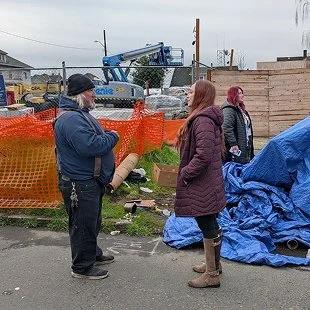
Project Hope Street Outreach
Our dedicated outreach team connects with unsheltered individuals, offering resources, support, and pathways to housing and stability.
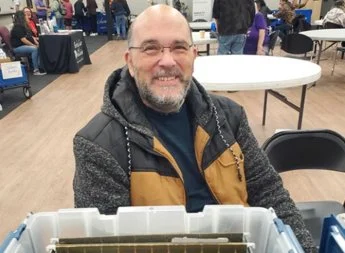
Mail Pick-Up Service
A vital resource for individuals without a permanent address, offering a secure location to receive mail and essential documents.
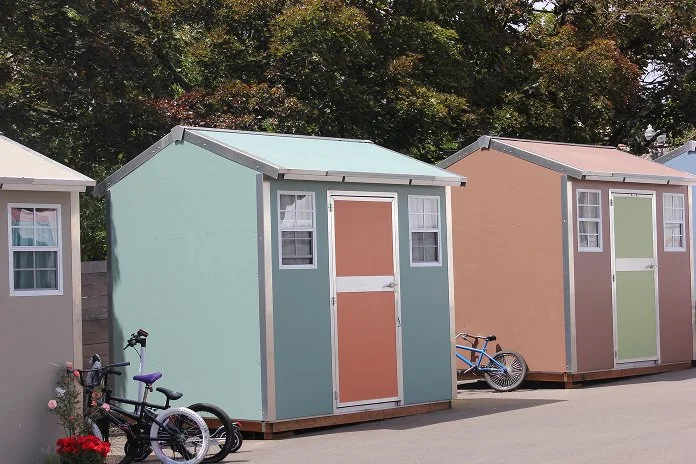
Shelter Services
Comprehensive shelter services with a peer support approach, offering safe, supportive environments for individuals experiencing homelessness while helping them build skills, access resources, and work toward stable housing.
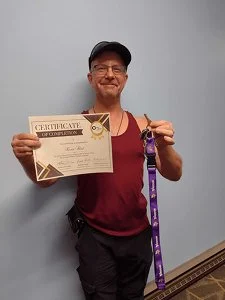
Housing Stability
Outsiders Inn's Housing Stabilization Specialist Program provides peer-based support to help individuals transitioning from homelessness to housing develop essential rental skills, maintain positive landlord relationships, and achieve long-term housing stability.
COMMUNITY COLLABORATION
In 2024, Together We Achieved
65+
Community members participated in our Meal Train.
16,355
Individual meals served to our shelter guests.
$98,130
Total value of meals donated by our amazing community cooks.
1,747
Community Partner Referrals to vital services completed.
Open this video’s page to find Brian’s extended interview.
[Extended Transcript]
Transcript Includes Mature Material, Audience Discretion is Advised
INTERVIEWER: Do you want to tell us a little bit about yourself? Maybe where you're from, what you like to do — anything.
BRIAN: My name is Brian Morrow.
BRIAN: I grew up in Pittsburgh and stayed there until I was about twelve, when we moved to South Carolina after they shut down the steel mills in my hometown. I lived there for about 38 years before I came out to Oregon. I've been out here about four years now.
INTERVIEWER: Is there anything you like to do in your free time?
BRIAN: I like to stay busy. I've always liked woodworking — lately I've been making walking sticks. If I find somebody who needs one, I'll give them one of the ones I've already made.
BRIAN: I don't charge anybody for them. It's just something that gives me something to do and keeps me out of trouble. It takes up a good bit of time, and it's something I really enjoy.
INTERVIEWER: How did you become homeless?
BRIAN: I became homeless when I came out here from South Carolina on the Greyhound bus. About fifteen minutes after I got off the bus, somebody hit me in the back of the head with something. I woke up a little while later with nothing but the clothes I was wearing.
BRIAN: I spent the first seven months in Portland homeless, until I found some people I'd known from South Carolina who were living out here. They took me up to their place in Woodland, but it didn't work out, so I came back down here.
BRIAN: I was working for somebody, and he ended up doing to me what most of the other people I've met out here did — he took everything I had. So I ended up on the street. It's taken a lot, but I clawed my way back up. I'm not going to let anybody hold me down for very long.
BRIAN: Terry's been a godsend to me. I couldn't have gotten to where I am now without her help.
INTERVIEWER: Can you tell us a little about how that happened?
BRIAN: I met Terry in October last year. Her granddaughter was moving from one apartment to another, and I volunteered to help. There were about five of us who came out to help, and I don't know what made her choose me, but she called me back a couple of times, and I started doing work for her one or two days a week here and there. We've become pretty good friends now — she helps me out when I need help.
BRIAN: I like having someone to talk to. We sit down, we eat together, we talk. If I've got something on my mind, I can talk to her about it, and she's there for me. She's been a rock.
INTERVIEWER: Before having Terry here for support, how did you get through it?
BRIAN: Honestly, I don't know. Before I came out here, my dad was killed in a bad car wreck back in South Carolina — somebody was on meth for five days, passed out behind the wheel after being up too long. It killed him instantly. My dad was my best friend. That was real hard.
INTERVIEWER: For the viewers who don't know — can you tell us what you do here, the yard work, the flowers you plant?
BRIAN: I come in a couple of days a week and take care of the flowers and the upkeep on the yard. I've picked up a few other customers since then, so I come in and do work one or two days a week, and it's helped out a lot.
BRIAN: It's therapeutic, coming in here and keeping up the yards, meeting new people. This neighborhood is a lot different from most of the places I've been around Vancouver and Portland — people here aren't stuck up, they're down to earth, they treat you with respect. Most people elsewhere don't even talk to you.
BRIAN: Everybody here has treated me really well. I love being in this neighborhood — I actually enjoy coming to work every day. I know I'll get true respect, that nobody looks down on me. When I was homeless, people looked down on me. That's hard to find around here.
INTERVIEWER: What specifically about the work has gotten you through a lot of it? How long have you been doing it?
BRIAN: I've been doing this landscaping work for about nine months now. Before that I was a carpenter, working with my dad in South Carolina — building houses, room additions, whatever came up. It gives me pride to look back and say, I did this, I put this together, and it looks good.
INTERVIEWER: How would you say being homeless compares to what life is like now?
BRIAN: Being homeless is rough. I didn't know anybody here when I first got here, so I didn't know where to go to find work. And even when I did find a place to look, nobody would hire me because I didn't have any experience here.
BRIAN: I didn't have a resumé to show anybody, and honestly didn't know anything about making one. I'd done construction my whole life — I don't know anything about paperwork. So I got by doing a lot of bottling and canning, stuff like that, to make money. But one thing I will say: I've never had anybody give me something I couldn't pay back, and I never will.
BRIAN: Terry's given me more than I could ever pay back. She's been there for me a hundred percent. My mom passed away two and a half years ago, on Christmas Eve, and I really don't have any family left. Terry's family now — she's been so good to me.
INTERVIEWER: Would you feel comfortable doing a dual interview? Terry, do you want to join in?
TERRI: Sure, if that's all right.
BRIAN: We volunteered to move her granddaughter from one apartment to another, and it went a lot better and quicker than we thought — it was a good move. I guess Terry liked how I went about doing things, because she's had me come do work for her here and there for about the last nine months.
INTERVIEWER: What are some of the best characteristics you've seen in him — the things that have carried him through all this?
TERRI: I've had homeless friends for decades, but here's the thing Brian has: the ability to keep fighting the fight. I'm not sure I could fight it myself, but I understand why people give up — it's so hard, and as a society we're not trained or taught how to treat homeless people well.
TERRI: When people say America is a classless society, that's the biggest lie there is. We're a society of classes, and tragically the homeless are at the bottom of the rung. But Brian just kept persevering. He'd call me ready to throw in the towel, and I'd say, well, I thought you wanted to get off the streets.
TERRI: At the time he was in a tiny house, and I told him, I thought you wanted your own apartment. He said, I do, I do. I said, well then it's going to take your favorite four-letter word: work. And he kept at it.
TERRI: One day he called and said, I'm getting my own apartment. I said, oh my God. Then a couple of weeks later he calls and says, I don't know, maybe they'll take it away from me. I said, what in the world would make you think that? That isn't how this works, Brian. You've earned it. You're doing the work, you're staying the course.
TERRI: Eventually I think he believed it. It takes a long time — even people who've never been homeless struggle to believe in themselves. But he has an apartment now, and he's very proud of it. He sends me pictures — my background is interior design, so he tells me about everything he's done, and he's proud of it, and so am I.
INTERVIEWER: Tell us how you felt in the moment you got your apartment.
BRIAN: It was more disbelief than anything. I wasn't going to believe it until I was actually in it. When it finally happened, I couldn't have been happier. It had been about three and a half years from the time I got off the bus out here to when I got my apartment, back in March of this year — almost four years.
INTERVIEWER: So you went from homelessness, to a tiny house, to your own apartment. The city of Vancouver has been your friend?
BRIAN: Yeah, they've been good to me. The City of Vancouver's been great to me. As far as people in the neighborhood go, some weren't so much there for me — I've had a few bad instances — but for the most part it's all been good.
INTERVIEWER: What was living in the tiny homes like?
BRIAN: It was a lot better than being on the street. They had heat, though no air conditioning when it got hot, and you didn't have to worry about going hungry. With the assistance I get from the state, I've always made sure to keep a lot of food on hand.
BRIAN: I like to cook, so it was nice having a kitchen there to make something each night. It was definitely a lot better than being on the street.
INTERVIEWER: Speaking to someone who was in your position three or four years ago, what's the biggest piece of advice you'd give them?
BRIAN: Don't give up. Don't let anybody tell you that you can't, because when they tell you that, they're lying to you. And if you let them tell you that you can't, you're giving up on yourself. Don't do that.
TERRI: I'd say don't give up. Even though it's so incredibly hard, I have intense admiration for every homeless person out there who's living to fight another day. There's a guy on one of my off-ramps — I see him whenever I go that direction, and I always check in on him, give him five dollars. He recognizes me now.
TERRI: From a mother's perspective, every homeless man and woman who crosses my path, I see them as the day they were born — somebody looked at that precious baby and had nothing but high hopes for them, even if they weren't able to help them. We all have family and friends who couldn't make the mark with their children, but every single human being deserves basic decency and respect.
INTERVIEWER: Do you have anything specific for people who have friends or family who are homeless — how do you keep the hope alive for someone in that position?
TERRI: I do, because — like Brian — I have strong opinions on that subject. I have friends who are well-off and have family members who are unhoused, and without exception, when I ask them about it, they say, I just can't think about it. And I tell them, then you're a coward. Thinking about hard things takes a lot of grit and guts, but you can't give up, and you have to encourage other people to do the same. All of my friends are givers, or they're not my friends.
INTERVIEWER: Brian, what would you say you're most proud of?
TERRI: Well, you earned it.
BRIAN: The thing I'm most proud of is my friendship with Terry. She's been there for me — there were times over the last nine months I wanted to give up, and she wouldn't let me. I'm proud to call her my friend.
TERRI: Brian finds it very difficult to believe that someone can love him. That's something a lot of us struggle with — all walks of life, especially men, because we're not always the smartest about it.
TERRI: Self-reflection, self-awareness, and self-acceptance are such powerful tools. I was born into very fortunate circumstances — I had my parents, both sets of grandparents, no struggling in the family. We were the quintessential middle-class American family. Once I got out into the world, I realized how fortunate I was, and that it was my responsibility to give back.
INTERVIEWER: Were there any moments during this that really stand out?
BRIAN: When you're out on the street, you don't really have time to think about what's good and what's bad — you're just trying to make it through every day. I can't think of any one thing off the top of my head that stands out as exceptionally good or bad. I just didn't have time to think about it that way. Anybody who says they had time to think about it while they were out there is lying to you, because it doesn't work like that.
INTERVIEWER: Can you explain more — why don't people experiencing homelessness have that time?
BRIAN: Because it's not like you're going to Walmart to pick out a pair of shoes. You're struggling every day to make whatever money you can for whatever you need. One of the biggest things for me was having marijuana — it helped a lot with my anxiety and my depression.
BRIAN: I had to find a way, every day, to make sure I had at least another smoke bowl before bed, just to slow my mind down enough to sleep. I never really had the luxury of slowing down long enough to think about things like that.
INTERVIEWER: So it's not that you don't have time to think about it — you're forced to deal with the problem itself, versus the privilege some people have of choosing not to think about it.
TERRI: Right — one side of that struggle has all the time in the world to think about it, and they don't care to. It's so much easier for people to sweep things under the rug than to actually use the wealth they have to help other people.
BRIAN: That's all Terry does is help. I don't care if she was down to her last ten dollars — if I needed it and asked for it, she'd help me with it.
TERRI: You'd have to pay me back, though.
BRIAN: Yeah — but there are other people out there who are wealthy, who have a child on the street, and treat it like it's not their problem. That's wrong. Why have a child in the first place if you're not going to help them through the good and the bad? It doesn't make sense to me.
TERRI: Let that be your guiding light — don't bring children into the world if you're not going to support them through thick and thin. Wrap it up, or better yet, get a vasectomy.
INTERVIEWER: Any other advice besides that?
TERRI: Take care of your own children. Don't sweep it under the rug because you think they'll embarrass you in front of your friends. If that's really how you feel about your children, give them up for adoption so they can have a better life. And yes — your kids will embarrass you, no doubt about it, whether you love them or not.
INTERVIEWER: Lastly — is there anything else important you'd like to share? A personal story, words of encouragement, anything at all.
BRIAN: One thing that stood out to me this morning, while we were waiting for you all to get here — I was out in the side yard raking, and Terry came out, looked at me, and said, 'Brian, don't get all sweaty out there.' I told her she sounded just like my mother. But that's the way Terry looks after me — she always has.
BRIAN: I appreciate her so much, and I appreciate the fight she gives. I appreciate anybody who does the work it takes to get themselves ahead in life, because you're either going forwards or you're going backwards, and I like to bet on winners. Going backwards doesn't get you anywhere.